Best Compact Espresso Machines for Small Kitchens: 8 Sized to Fit
Eight compact espresso machines chosen by the numbers that matter in a small kitchen — width of the gap, clearance under the cabinet, and where the tank loads — from a 4-inch pod machine to the widest one worth the counter.
Skip to the goods in this piece (10) ↓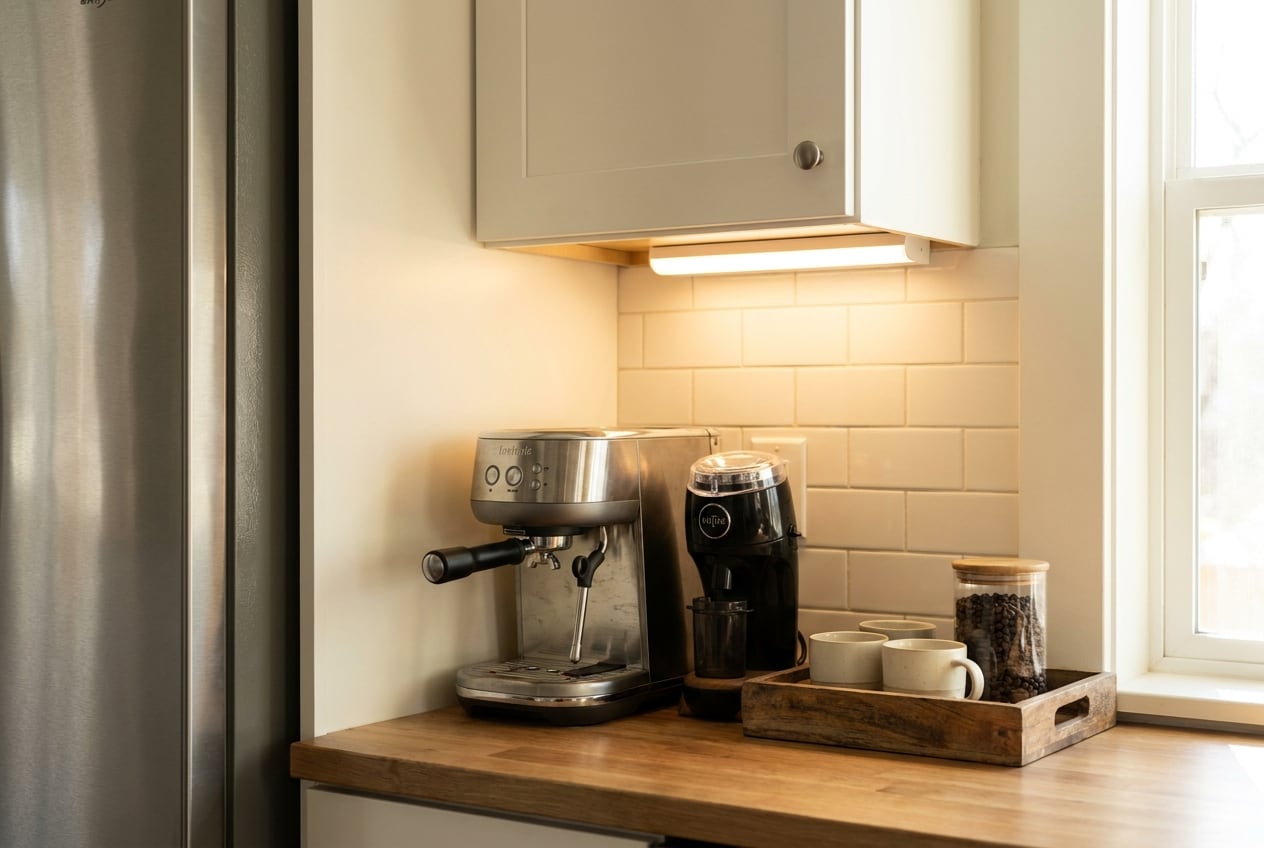
Shopping for a compact espresso machine is mostly a measuring exercise, and the measurements are not the ones the listings lead with. Bar pressure is marketing. What decides whether a machine works on a small counter is the width of the gap you have, the height under the wall cabinet, and whether the water tank loads from the back or through a lid on top. Take those three numbers into the list below and most of it filters itself.
The three measurements that decide it
Width of the gap. The typical small coffee station is a 24-inch run of counter, the same strip we work with in the small-space layouts. Machine plus grinder plus a tray for cups fits on 24 inches only if the machine is 8 inches wide or less. Under 6 inches and the machine can live in the slot beside the refrigerator that has never held anything useful.
Height under the cabinet. Standard uppers hang with 18 inches of clearance above the counter. Older kitchens and some apartments run 15 or 16. Every machine below clears 18 inches on paper, but the number that matters is the height with the lid open, because you fill some of these from the top.
Where the tank loads. Rear-loading tanks lift straight up out of the back, so the machine needs an inch or two of headroom and nothing more. Top-lid tanks and bean hoppers need the lid to swing open, which can mean 4 extra inches. This is the spec that sends machines back, and it is rarely in the listing.
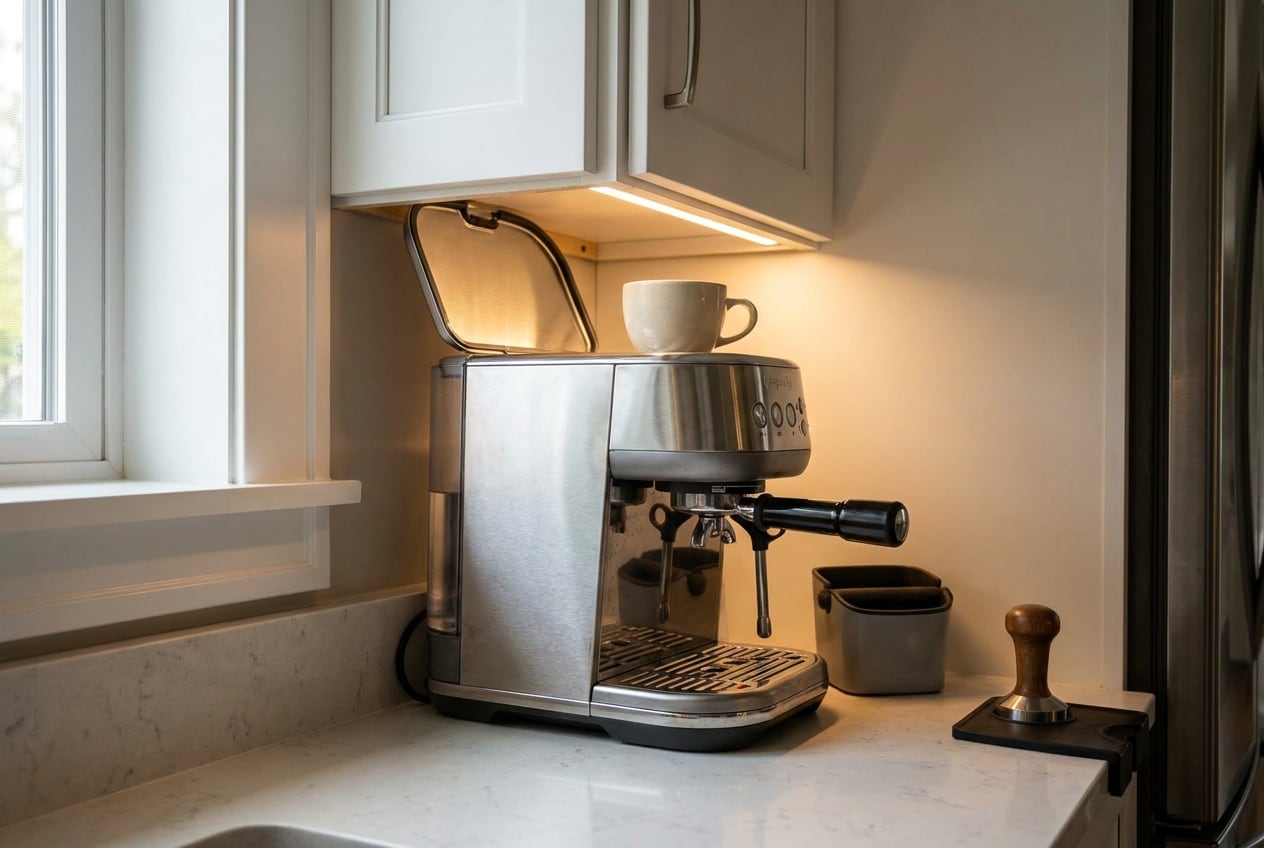
1. Breville Bambino: the compact benchmark
Just under 8 inches wide, 12 inches tall, and it heats in about three seconds, which is the feature that changes a weekday. The Breville Bambino has a proper steam wand rather than a frothing attachment, a 54-millimeter portafilter that takes standard accessories, and a 1.4-liter tank that lifts out the back. It has no grinder, so budget for a conical burr grinder beside it, and together they still fit a 24-inch strip with a tray to spare.
The honest caveat: it is a manual-milk machine, and the wand rewards practice. If that sounds like a chore rather than a hobby, skip to number five.
2. De’Longhi Dedica Arte: the six-inch machine
The Dedica Arte is 5.9 inches wide, and that number is the whole review. It is the machine that turns the dead gap between the fridge and the wall into an espresso bar, and the reason it appears in so many of the apartment setups we’ve measured. Thirteen inches deep, 12 tall, a 35-ounce tank that pulls out the back, and a steam wand that was redesigned to make real microfoam instead of the stiff froth older Dedicas were known for.
It runs a 51-millimeter portafilter, which is a size to remember when you buy a tamper, and it makes one drink at a time. For a household of two who each want a latte, that is a small ritual. For four, it’s a queue.
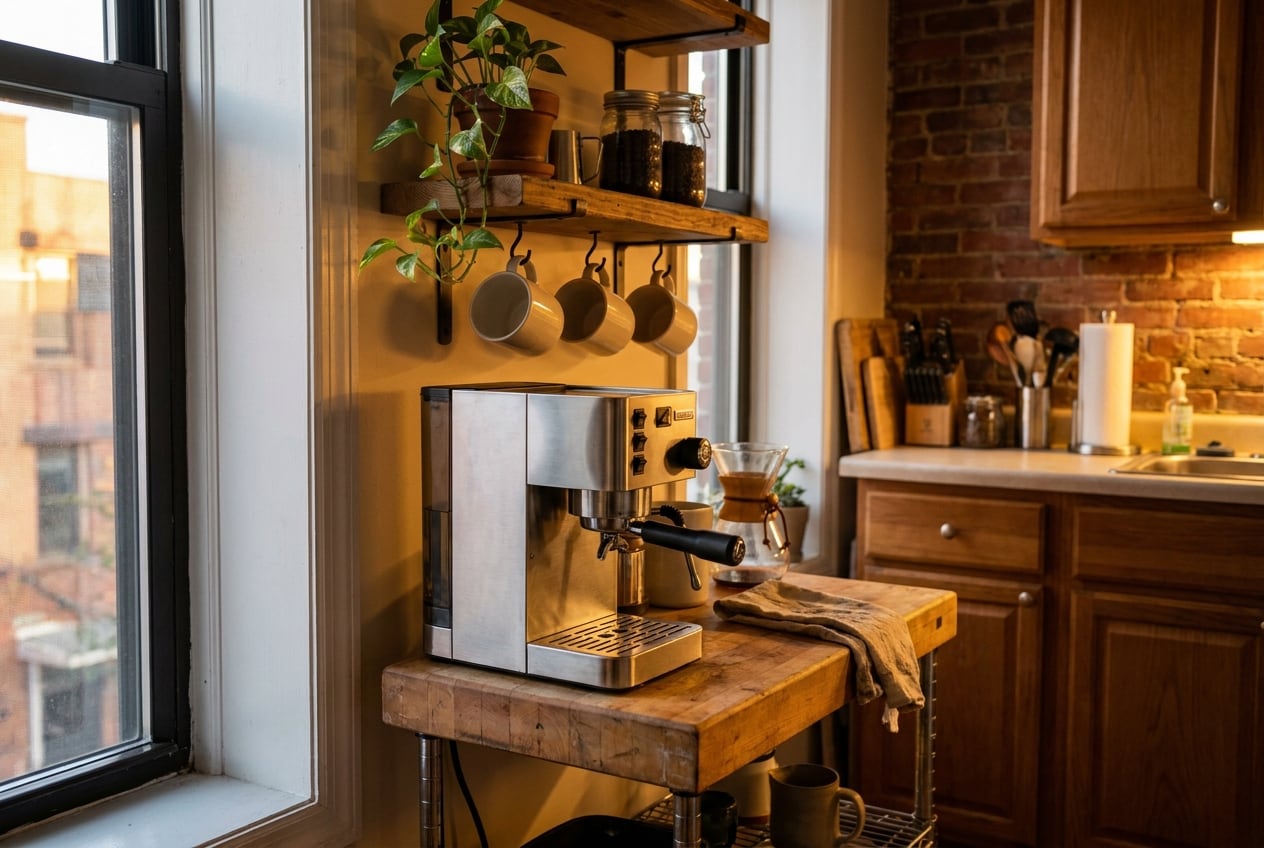
3. De’Longhi Stilosa: the budget pick
Eight inches wide and only 11.2 inches tall, the Stilosa is the shortest machine on this list, which makes it the answer for the 15-inch cabinet clearance that older kitchens hide. The steam arm is a manual frothing wand with a plastic sleeve, the drip tray is small, and the body is mostly plastic with a stainless face. None of that matters for what it costs, and the review count on it runs into five figures because it does the job.
Pair it with the same burr grinder as the Bambino. A good grinder and this machine beats a great machine and pre-ground coffee, every time.
4. Casabrews CM5418: the one Amazon buyers actually pick
Search “compact espresso machine” on Amazon and the Casabrews CM5418 is the first result, with thousands of reviews holding a strong average. It earns that on dimensions: 5.9 inches wide, 12 deep, 12.3 tall, the same slot the Dedica fits with a pressure gauge on the front that tells a beginner whether the grind is right. The steam wand is real, the 34-ounce tank lifts out the back, and the portafilter is 51 millimeters.
What you give up against the Bambino is heat-up time and recovery between shots. What you give up against the Dedica is the brand’s service network. For a first machine in a small kitchen, it is a defensible way to find out whether espresso is going to be a habit before spending three times as much.
5. Breville Bambino Plus: the same footprint, milk done for you
Identical width and height to the Bambino, one difference: the Bambino Plus textures the milk automatically. Set temperature and foam level on two buttons, lower the jug, and it stops itself. That single change is why it shows up on so many coffee lover gift lists, including our own gift guide. It is the machine for a household where one person wants lattes and nobody wants to learn a steam wand.
Same tank, same portafilter, same grinder requirement. If the extra cost hurts, the standard Bambino makes the identical shot.
6. Gaggia Classic Evo Pro: the one you never outgrow
Eight inches wide and 9.5 deep, so the Gaggia Classic Evo Pro takes less counter than the Stilosa. It also weighs 20 pounds, runs a 58-millimeter commercial portafilter on a brass group, and has been made in more or less this form for three decades. This is the compact machine people move up to after the first one, and the only one here you will still be pulling shots on in 15 years.
The catch is vertical. It stands 14.2 inches tall and the 2.1-liter tank fills through a lid on top, so under an 18-inch cabinet you fill it with a pitcher rather than lifting the tank out. Measure that before you fall for it. It needs a grinder that can go genuinely fine, which is where the burr grinder most people start hits its limit.
7. Nespresso Essenza Mini: the four-inch machine
If the honest measurement is “there is no counter,” this is the answer. The Essenza Mini is 4.3 inches wide, 8 inches tall, and weighs 6 pounds, which is why it turns up on trays, on shelves, and in the mini coffee corners that live in bedrooms and offices. It makes espresso from capsules with real crema, heats in under half a minute, and its 20-ounce tank lifts off the back.
It has no milk system. Add the electric milk frother beside it, another 4 inches of counter, and you have a complete latte station in a footprint narrower than a toaster. Capsule storage goes in a drawer, not on the counter; the organization guide covers the drawer insert that makes that painless.
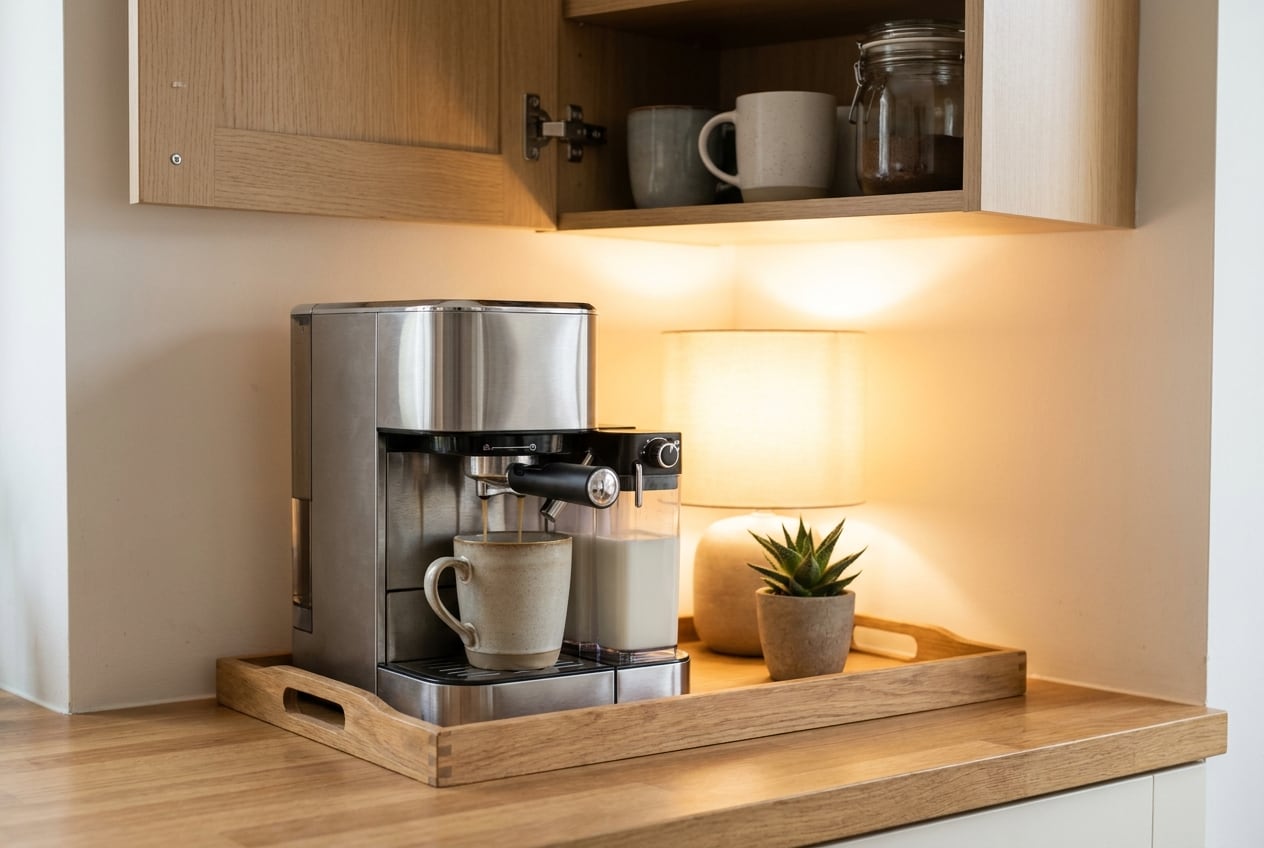
8. Philips 3200 LatteGo: the one-touch pick
Different lane. The Philips 3200 LatteGo grinds the beans, pulls the shot, and pours the milk on one button, and cleans its milk system with water afterward. At 9.7 inches wide it takes more counter than anything above it, but it also eliminates the grinder, the tamper, the knock box, and the pitcher, so the total footprint is often smaller than a Bambino setup once the accessories are counted. Fourteen and a half inches tall; the bean hopper lid on top wants a few inches of headroom.
This is the machine for a household that wants five different drinks before 8 a.m. and nobody standing at the wand. The shot is a step behind the manual machines above. For most people making lattes, that step is invisible.
If you have thirteen inches: the Barista Express
Not compact, and it is here because someone with a 13-inch gap will otherwise buy two machines’ worth of counter. The Breville Barista Express builds a conical burr grinder into the machine, so machine plus grinder is one 12.5-inch-wide footprint instead of a machine and a separate grinder side by side. Nearly 16 inches tall with a top-loading hopper, so it wants the full 18-inch clearance and a little more when the lid is open. Tens of thousands of reviews and the highest rating in its class; it is the default answer for a reason.
What the box doesn’t include
Every manual machine above ships without the four things you will use daily. A knock box for spent pucks, a stainless milk pitcher sized to the wand, a 0.1-gram scale so the dose is the same on Tuesday as on Saturday, and descaling solution, because the boiler in a compact machine is small and scales faster than a big one. Put a bar service mat under all of it if the counter is wood.
Which one, by the gap you have
| Gap on the counter | Pick | Height | Tank loads from |
|---|---|---|---|
| Under 6 inches | Essenza Mini | 8 in | back |
| 6 inches | Dedica Arte or Casabrews CM5418 | 12 in | back |
| 8 inches | Bambino, Bambino Plus, or Stilosa | 11 to 12 in | back |
| 8 inches, tall cabinets | Gaggia Classic Evo Pro | 14 in | top lid |
| 10 inches | Philips 3200 LatteGo | 15 in | top hopper |
| 13 inches | Barista Express | 16 in | top hopper |
Measure the gap, measure the clearance, then buy the machine one size smaller than the maximum that fits. The extra inch is where the cup goes.
Some links in this article are affiliate links — if you buy through them we may earn a commission at no extra cost to you. Details.