Coffee Station Ideas: 12 Countertop Layouts
Twelve coffee station ideas for a countertop, covering left-to-right workflow, mess containment, cords, circuits and the decor rule that keeps it from creeping.
Skip to the goods in this piece (6) ↓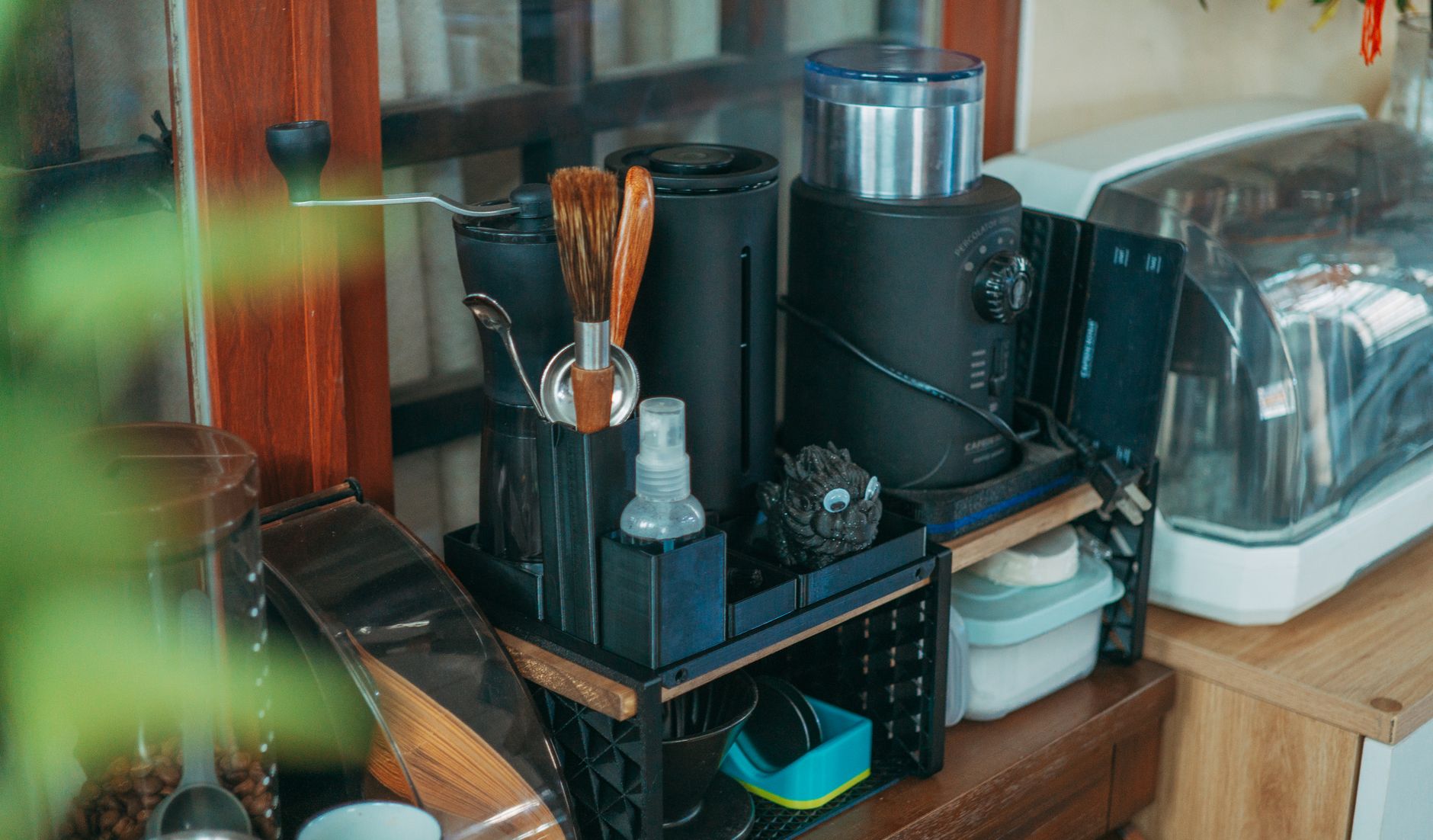
Most coffee station ideas for a countertop stop at what goes on the surface and skip how the surface gets used. The twelve below are about arrangement: what order things sit in, where the mess lands, which circuit the kettle is on, and how much bare counter to leave alone. Some of it is layout and some of it is decor, and the layout is what determines whether the station survives a busy Tuesday.
1. Lay It Out in the Order You Use It
Beans, grinder, machine, mug. Arranged left to right in that sequence, the whole routine is one pass with no backtracking, and every object ends up within about a foot of the one before it. Arranged any other way, the same four objects create three reversals every morning, which is invisible on paper and obvious after a week. Left-handed households run it right to left for the same reason. The one item that breaks the line is the scale, which wants to sit directly in front of the grinder rather than beside it, since it gets used twice in the same twenty seconds.
2. Put the Grinder Where the Mess Lands
Grinders shed. Chaff carries a few inches on static and grounds scatter around the base every time the hopper is loaded or the catch cup is knocked out, and no amount of technique fixes it. A ribbed bar service mat under the grinder and machine collects both and goes in the sink, which turns a daily wipe-down into a weekly rinse. The 6-by-12 size handles a grinder alone; 12-by-18 covers a grinder and a machine side by side.
3. A Butcher Block Slab to Define the Surface
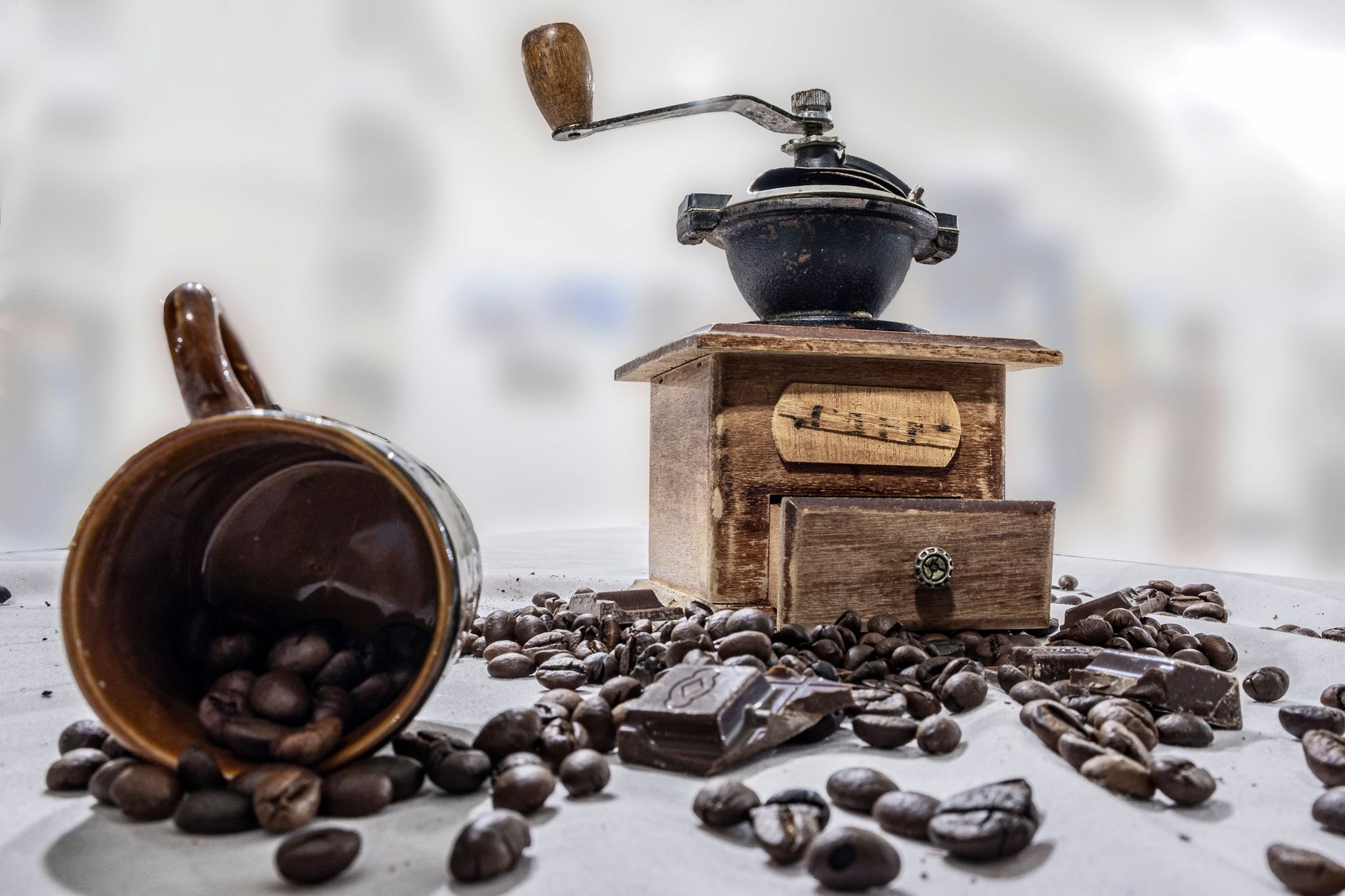
A thick wood board, roughly 18 by 24 or larger, makes the station a defined object rather than a section of counter that things have drifted onto. It also absorbs heat and knocks that would otherwise land on quartz or laminate. A butcher block slab needs mineral oil every few weeks in a spot this wet, and it should never sit directly under a steam wand, since standing moisture on end grain lifts the finish.
4. Canisters Instead of Bags
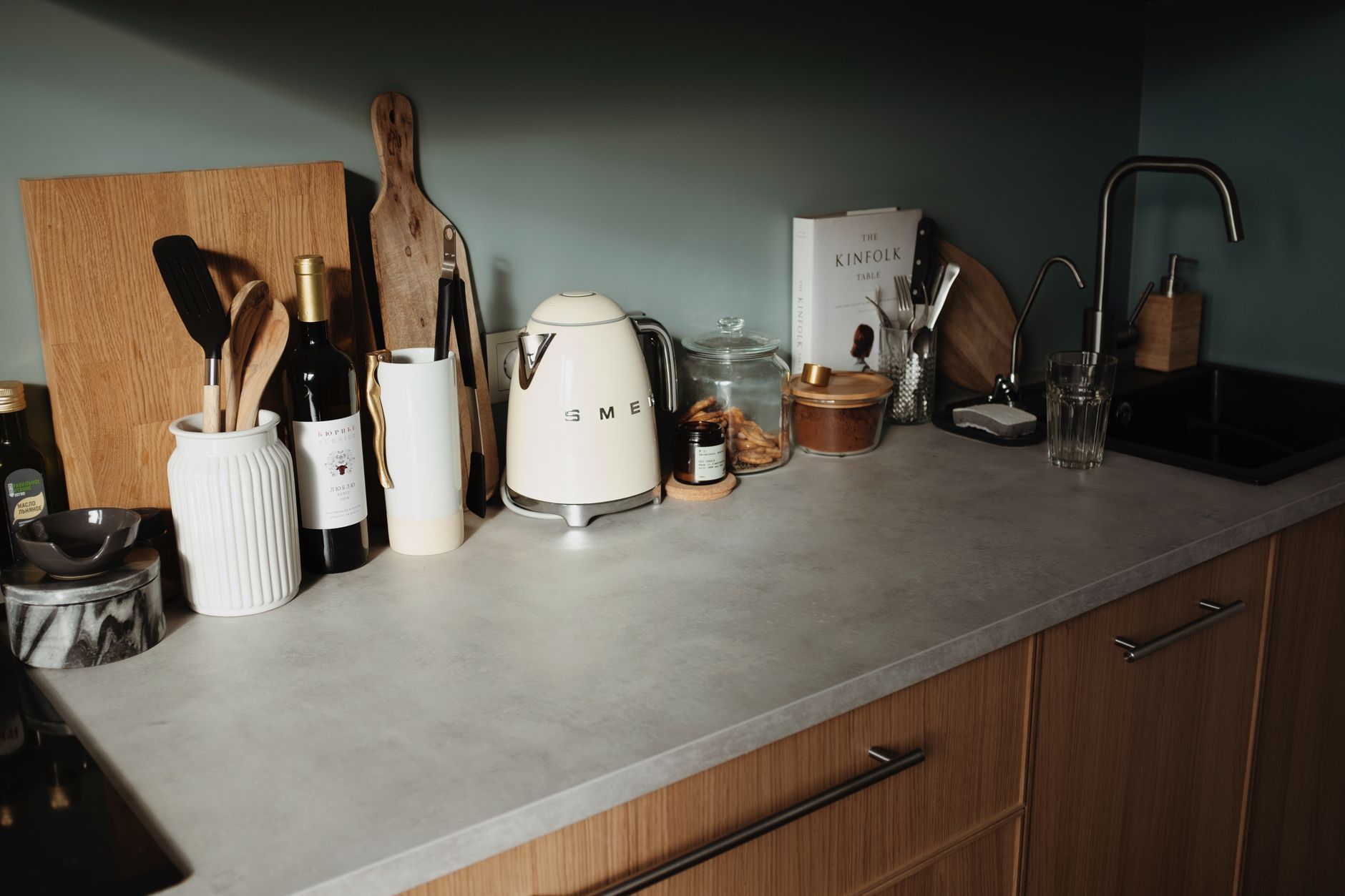
Nothing makes a coffee station kitchen setup look half-finished faster than three bags with the tops rolled down. Sealed containers fix the appearance and the staling at once, and a matched sealed glass canister set handles beans, sugar and cocoa in one visual move. Glass is fine as long as the station is not in direct sun; if it is, opaque wins on function and the glass moves to the sugar.
5. A Picture Ledge Behind the Station
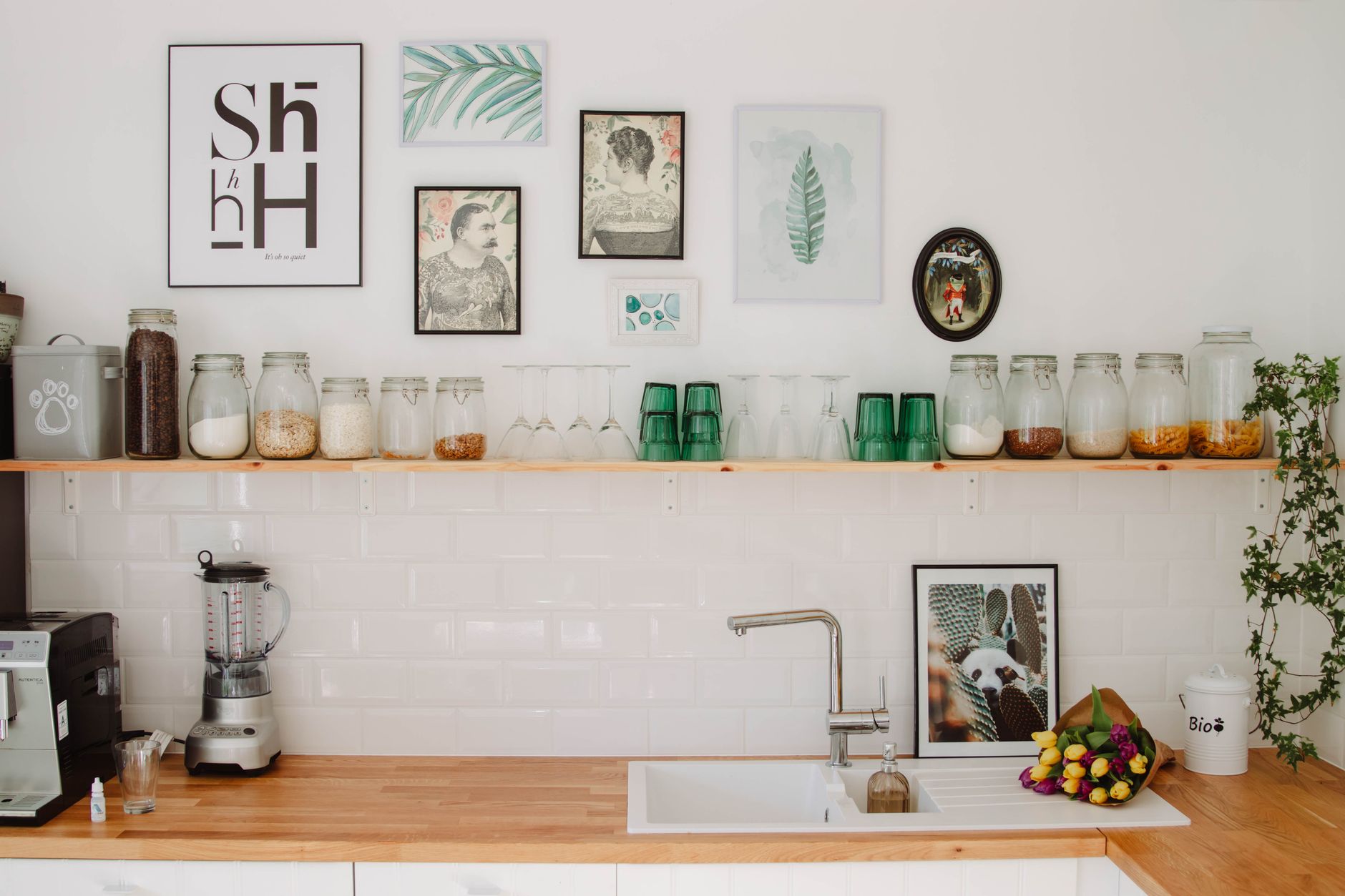
A picture ledge is about three and a half inches deep, which is enough for a small print, a bag of beans standing up, and nothing else. That limit is the feature. Deeper shelves in this position collect vitamins, mail and receipts within a month, while a narrow picture ledge shelf physically cannot. Mount it high enough that the tallest thing on the counter clears it, usually 20 to 24 inches above the surface, and it can span the full width of the station without any of the visual weight a cabinet would add.
6. Solve the Cord Before It Becomes Permanent
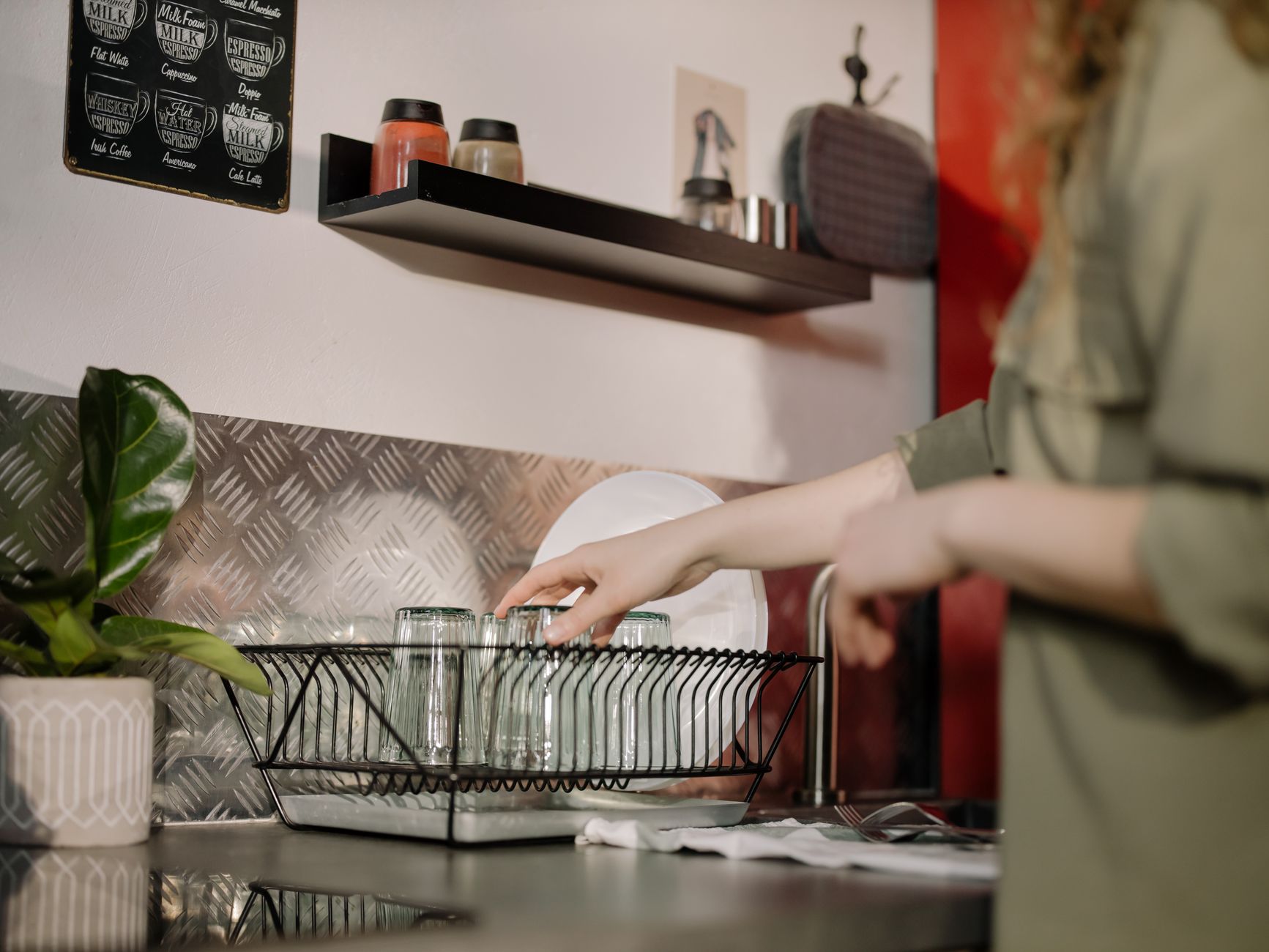
Small appliance cords are deliberately short, often two to three feet, which is a safety decision and not an oversight. That length forces the machine within a stride of the receptacle and leaves a visible loop on the counter. Adhesive cord clips run the slack down the back of the cabinet gable, out of sight, and the whole job is about ten minutes. Skip the temptation to daisy-chain a heating appliance through an extension cord.
7. Know Which Circuit You Are On
Kitchen countertops are typically served by two dedicated 20-amp small-appliance circuits, which sounds generous until the arithmetic gets done. A 1,500-watt kettle plus a 1,200-watt toaster is 2,700 watts on a circuit rated for 2,400, and the breaker will find that before you do. Plug the station and the toaster into receptacles on opposite ends of the counter run, which are usually on different circuits, and the problem disappears. Older kitchens are the ones to check carefully, since a single shared circuit for the whole counter was normal for decades and a kettle and a microwave together will exceed it every time.
8. A Riser Shelf for Mugs Rather Than a Cabinet
Mugs stored in an upper cabinet mean opening a door mid-routine with wet hands. A stepped riser holds six to eight mugs in a footprint under a square foot, at the exact spot where the pour happens. Two tiers is the practical limit before the top row is above comfortable reach for anyone under about five foot six. The riser also creates usable space underneath itself, which is the right home for the filters or the small stack of saucers that otherwise lives loose on the counter.
9. Keep a Lidded Bin for Grounds Within Reach
Spent grounds go somewhere, and the two default answers both cause trouble: the sink drain builds up in the trap, and a walk across the kitchen means grounds on the floor. A compact knock box or any small lidded container at the station solves it, and it empties into the compost or the trash once a day rather than four times. Lidded matters more than it sounds, since damp grounds left open on a counter for a warm afternoon are the source of a smell most people blame on the machine.
10. Coffee Station Decor: The Three-Object Rule
Coffee station decor goes wrong through accumulation rather than through any single bad choice. A workable ceiling is three non-functional objects total: one plant, one framed or lettered piece, one textile. Everything past that competes with the equipment for attention, and the equipment is what the station is for. The wood-and-linen version of this restraint is worked through in farmhouse coffee bar ideas.
11. A Counter-Height Table as the Extension
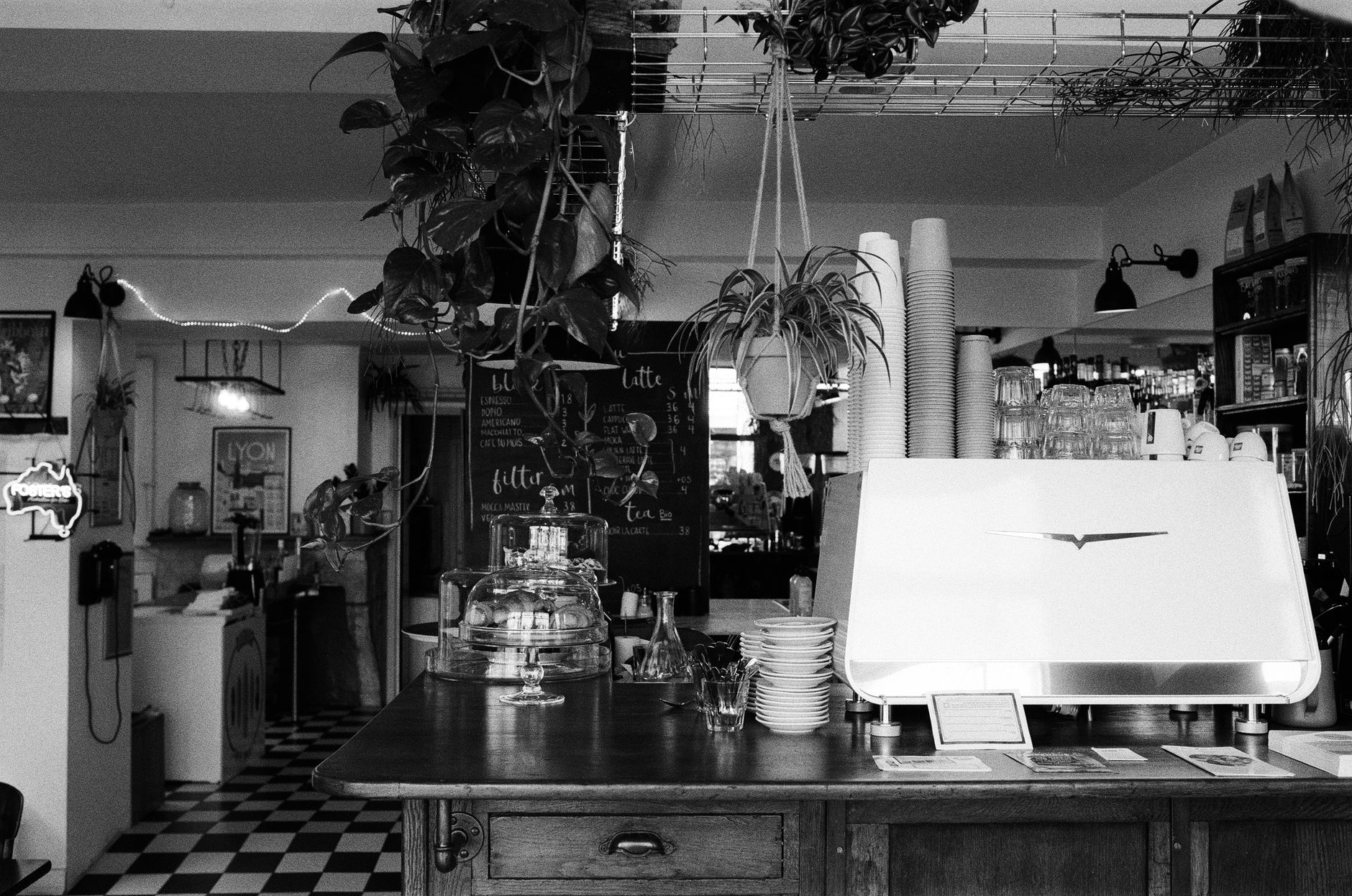
When the counter run genuinely has no free space, a coffee station table set against the end of the counter or an island adds working surface without a renovation. Height is the detail that decides whether it reads as built-in or as furniture that wandered in: a standard 30-inch dining table next to a 36-inch counter creates a visible step, while a counter-height table at 36 inches runs flush and effectively lengthens the run. Bar height at 42 inches is too tall to work on standing and belongs to stools instead.
12. Leave a Landing Zone
The most useful part of a countertop station is the part with nothing on it. Eight to ten inches of clear counter beside the machine gives somewhere to set a hot mug, open a bag, or rest a portafilter while the shot pulls. Stations without it end up using the stovetop or the sink edge for that, which is how mugs get knocked over. Defend the empty space as deliberately as anything else on the counter; it is the first thing a new canister takes and the hardest thing to get back.
What Goes Wrong Over Six Months
Countertop stations do not fail on day one. They fail by creeping: a second grinder, a box of tea nobody drinks, four travel mugs, a bag of a roast that turned out to be mediocre. The layout stays sound and the free surface disappears.
Two habits hold the line. First, anything not used in the last week moves to the cabinet or the drawer below, which keeps the counter to what runs daily. Second, containers get sized to the routine rather than to the bag, so backstock lives in a closed container elsewhere and the station holds a week at a time. The container-and-label side of that is covered in coffee station organization, and the question of which pieces of equipment genuinely deserve permanent counter space is worked through in coffee bar essentials.
Some links in this article are affiliate links — if you buy through them we may earn a commission at no extra cost to you. Details.