Best Nespresso Machines: 5 Picks Sized for a Real Coffee Bar
The five Nespresso machines worth buying, sorted by the two specs that actually decide it — how wide your gap is and how deep your counter runs — plus where the pods go and when to skip pods entirely.
Skip to the goods in this piece (10) ↓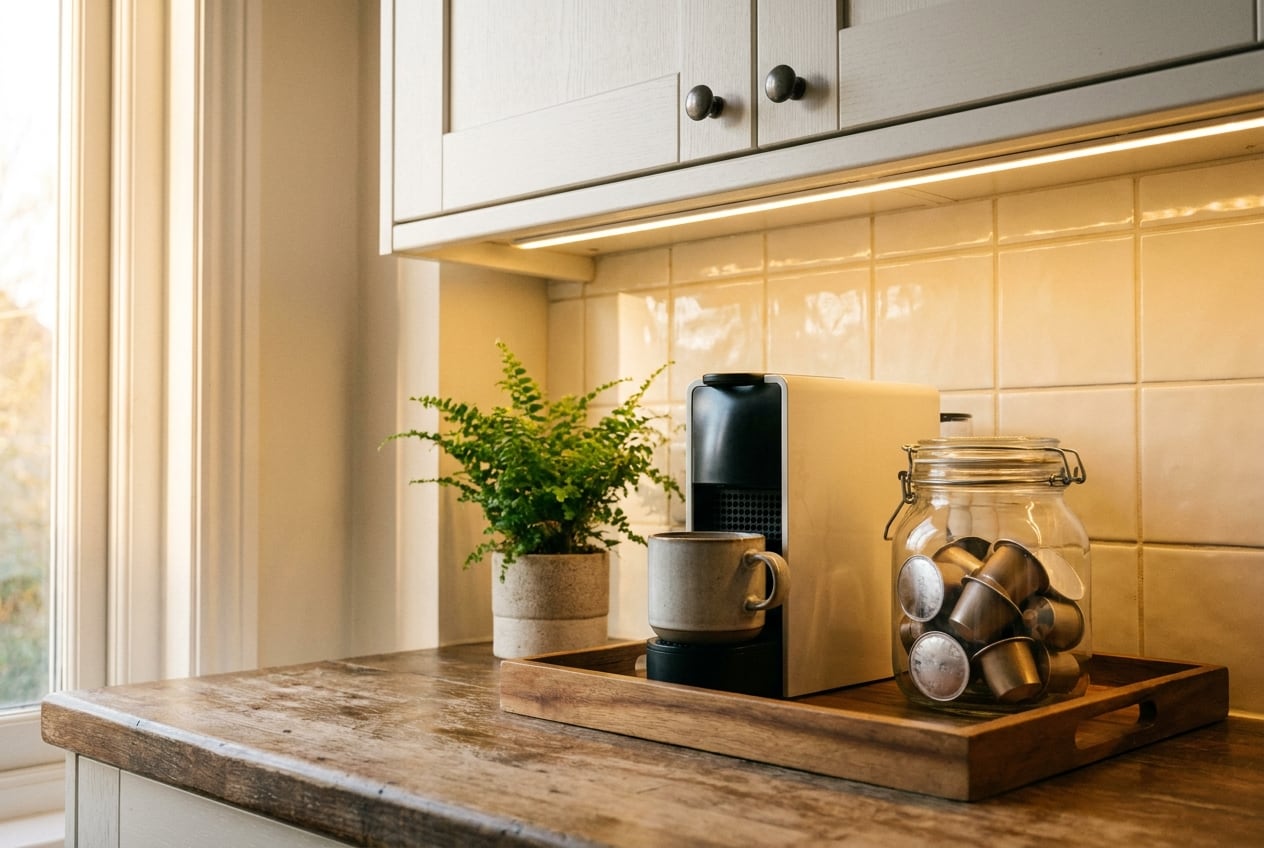
Nespresso sells two machines that share a name and almost nothing else, and picking the wrong line is the mistake that gets a machine resold six months later. After that, the decision is the same one that governs every piece on a small coffee bar: how wide the gap is, and how deep the counter runs. Bar pressure, watts, and the number of drink buttons are not what send these machines back.
First: Original or Vertuo
Original machines take the small espresso-sized capsule and pull a shot at proper pressure. You get espresso and lungo, and you make a latte by adding milk yourself. The capsules are made by dozens of brands besides Nespresso, so the per-cup cost can drop a long way if you shop for them.
Vertuo machines read a barcode printed on the rim of a larger, domed pod and spin it instead of pressing it, which means one machine can make an espresso, a mug of coffee, or a carafe depending on the pod you drop in. The tradeoff is the ecosystem: the barcode system means far fewer third-party options, so you are largely buying pods from one place forever.
The short version: if you drink espresso and milk drinks, buy Original. If you drink a full mug of black coffee and want it pushbutton, buy Vertuo. If you want to grind beans and pull real shots, neither of these is your machine and the compact espresso machines guide is the one to read.
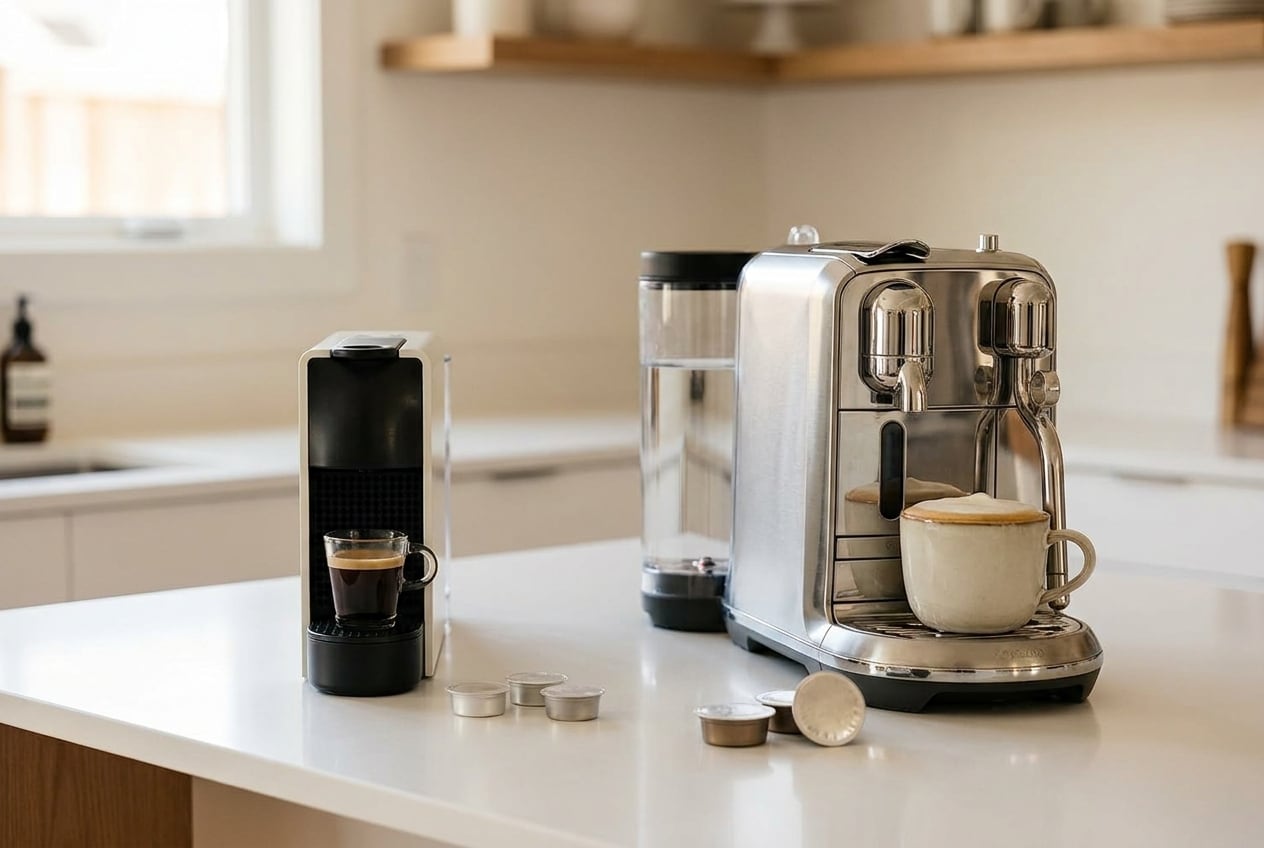
Second: the spec nobody checks is depth
Every listing leads with how slim these machines are, and the Original line genuinely is — between four and five inches wide. What the thumbnails hide is that they are all roughly twelve and a half inches deep, and the Vertuo machines run fourteen to seventeen inches deep.
That matters because a coffee bar is often not a kitchen counter. A standard counter gives you about twenty-four usable inches of depth and swallows anything here. But a sideboard is usually sixteen to eighteen inches deep, a bar cart twelve to sixteen, and a bookshelf or floating shelf twelve or less. Put a seventeen-inch-deep Vertuo Next on a twelve-inch shelf and an inch of machine hangs into space with the water tank behind it. The cabinet and cart sizing guide has the depth numbers for the usual furniture; measure yours before you shop.
The Original line
1. Essenza Mini: the one that fits anywhere
The Essenza Mini is 4.3 inches wide, about 8 inches deep, and 12.8 inches tall, which makes it the only machine in this guide that fits a shallow shelf, a nightstand, or the twelve-inch-deep top of a narrow cart. It weighs a little over four pounds. Two buttons, espresso and lungo, a half-liter tank, and it holds the highest rating in the line across thousands of reviews.
What you give up is capacity and comfort: a small tank you will refill often, a used-capsule bin that holds about six, and no drip-tray adjustment for tall glasses. For a one- or two-cup morning in a tight corner, none of that registers.
2. Pixie: metal body, fast start
The Pixie is 4.6 inches wide and 12.8 deep, built with metal side panels instead of plastic, and it heats in roughly 25 seconds. It has a backlit warning when the tank runs low and a slightly larger used-capsule bin than the Essenza. This is the Original machine to buy if the coffee bar is on display and you want the machine to look like equipment rather than an appliance, which is the same reasoning behind the hardware choices in the farmhouse coffee bar guide.
The tank is under a liter and sits behind the machine, so that twelve-inch depth is not negotiable.
3. Inissia: the one most people buy
The Inissia is 4.7 inches wide, 12.6 deep, and just over five pounds, with a folding drip tray so a tall glass can sit directly on the base. Its review count runs into the thousands, higher than anything else in the line, which is worth something on its own. Functionally it is the Pixie in a plastic body, usually for less.
If you are choosing blind among these three, the decision is simple. Shallow shelf, Essenza Mini. Want it to look expensive, Pixie. Want the safe default, Inissia.
The Vertuo line
4. Vertuo Next: narrow in front, huge at the side
The Vertuo Next presents a 5.5- to 6-inch face, which is how it gets marketed as compact, and then runs about 17 inches deep and 12 tall. It brews five cup sizes from espresso up to a carafe, and it is the newest body in the line. Just treat that depth number as the real spec. On a standard counter it disappears; on a sideboard or cart it dominates, and on a shelf it does not fit at all.
5. Vertuo Pop+: the compact one
The Vertuo Pop+ is the smaller Vertuo: 8.6 inches wide, 14 deep, 10.4 tall, and under eight pounds. Wider than the Next across the front, but three inches shallower, which is the dimension that decides whether it works on a cart. Four cup sizes rather than five, a smaller tank, and it comes in colors that suit a styled station better than black plastic does.
For a Vertuo drinker with a coffee bar rather than a kitchen counter, this is the pick.
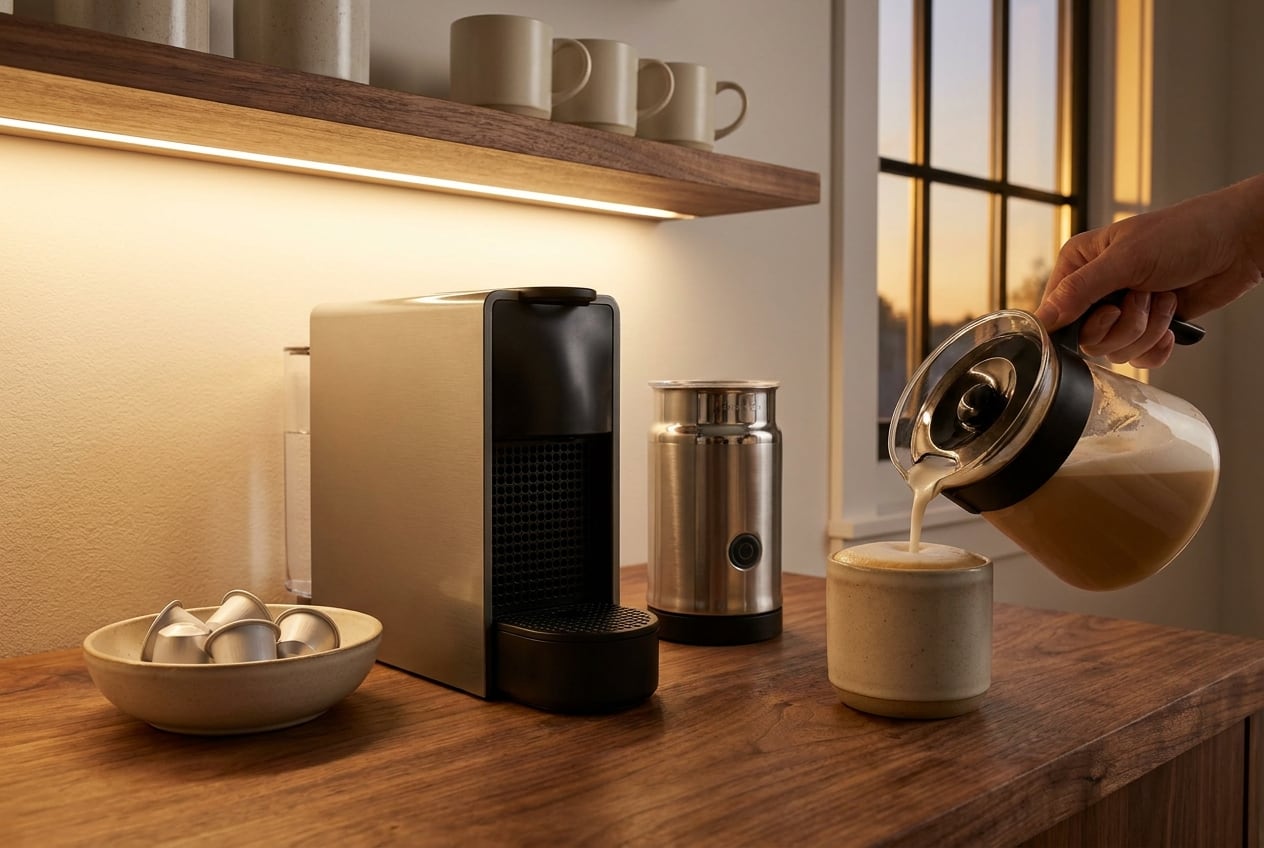
Milk: buy the cheap frother first
None of the five machines above steam milk. The standard advice is to add the branded frother, and the Aeroccino XL is genuinely good at it — hot and cold foam, quiet, enough capacity for two mugs at once, and it matches the machine on the counter. It also costs about as much as some of the machines.
A plain electric milk frother does hot and cold foam in a four-inch-square footprint for a fraction of that, with a rating built on tens of thousands of reviews. Buy that first. If you use it every day for six months and want the quieter one that matches, upgrade then. This is the same logic the essentials guide applies to every accessory on a station.
Where the pods go
A pod machine is only as tidy as its capsule storage, and the cardboard sleeves are the ugliest object on any coffee bar. Three answers, in order of how much counter they cost you.
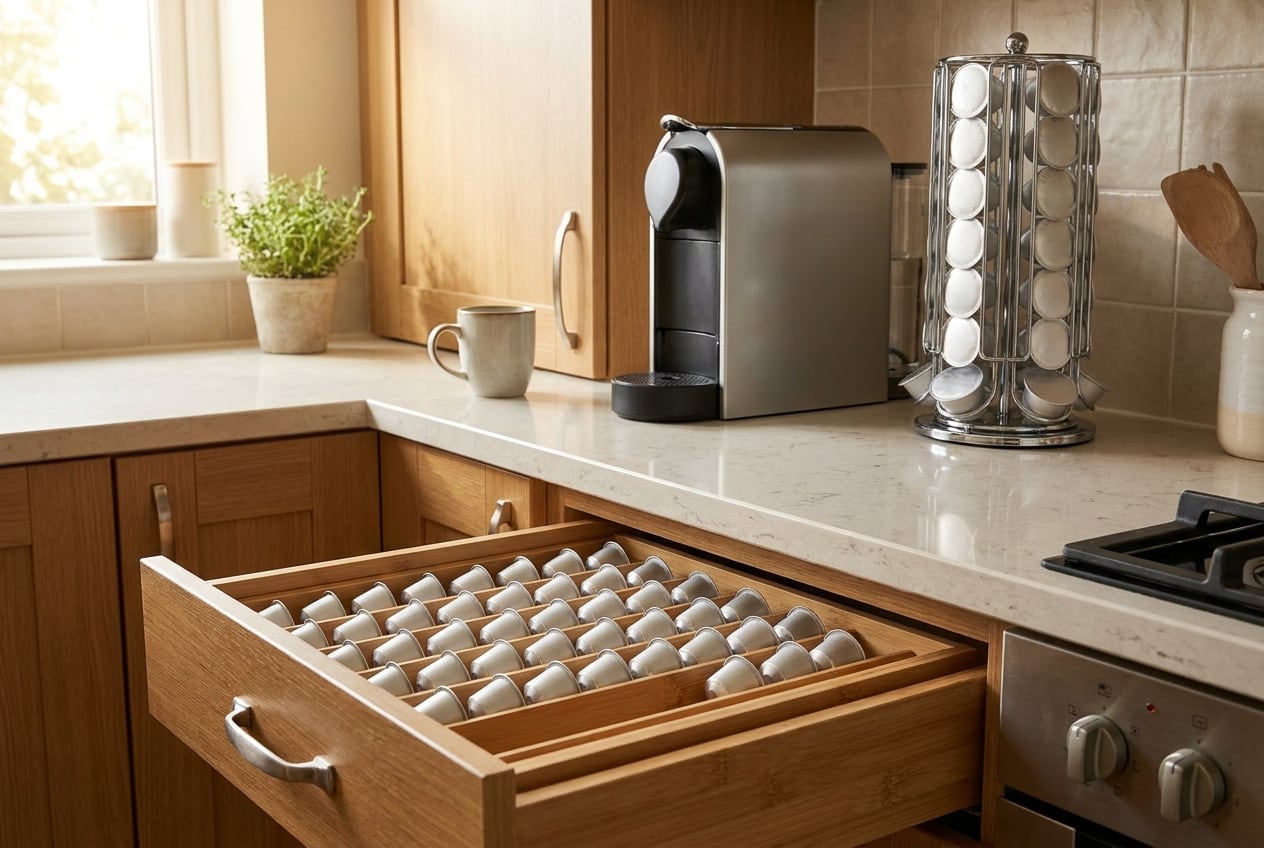
A drawer insert, if there is a drawer. Two inches tall, so it fits the shallow top drawer under most counters and leaves room for nothing else to slide around. The Original-line pod drawer holds about fifty capsules in a 15-by-9-inch tray, and its review count is the largest of anything in this guide by a wide margin.
Vertuo pods are physically bigger and will not sit in an Original insert, so the Vertuo pod drawer is a separate purchase sized for the taller sleeves. Check which line you bought before ordering. This is the most common returned-item mistake in the category, and the coffee station organization guide covers the rest of the drawer.
A carousel, if there is no drawer. A rotating pod tower holds around forty pods in about a six-inch circle, spins to find the one you want, and reads as intentional next to the machine rather than as clutter.
A jar, if you like the look. Any lidded glass canister holds capsules attractively and costs nothing extra if you already own one. It is the least efficient storage here and by far the most photogenic.
Which one, by what you have
| Your situation | Pick | Width | Depth |
|---|---|---|---|
| A shelf, a cart top, or a nightstand | Essenza Mini | 4.3 in | 8 in |
| A narrow gap, want it to look good | Pixie | 4.6 in | 12.8 in |
| A narrow gap, want the default | Inissia | 4.7 in | 12.6 in |
| A full-depth counter, drink mugs | Vertuo Next | 5.5 in | 17 in |
| A sideboard or cart, drink mugs | Vertuo Pop+ | 8.6 in | 14 in |
Every machine here needs an outlet within a cord’s reach and about four inches of clearance behind it for the tank, which the kitchen counter layouts guide covers alongside the circuit math. Measure the depth, pick the line, and put the capsules in a drawer.
Some links in this article are affiliate links — if you buy through them we may earn a commission at no extra cost to you. Details.